

Houston’s extreme heat and humidity put massive stress on residential HVAC systems. When the evaporator coil fails — usually from corrosion, refrigerant leaks, or dirt buildup — homeowners face a critical decision: replace only the indoor coil or invest in a complete new HVAC system. This choice affects comfort, energy bills, and long-term reliability.
According to the U.S. Department of Energy, new systems in the South region must meet a minimum 14.3 SEER2 rating since 2023, and the EPA’s R-22 phase-out has made old coils nearly impossible to repair legally and economically. This concise 2025–2026 guide gives Houston homeowners clear, neutral criteria to make the technically correct choice.
| System Age | Refrigerant | Current SEER | Best Technical Recommendation in Houston (2025–2026) | Typical Cost Range |
| < 6 years | R-410A | 14+ | Replace coil only if leak is isolated | $950 – $2,100 |
| 6–9 years | R-410A | 13–14 | Coil usually OK if no corrosion; consider full upgrade for efficiency | $950 – $2,100 or $7,800 – $11,500 |
| ≥ 8 years | R-22 | ≤ 12 | Full HVAC system replacement (R-22 obsolete) | $7,800 – $11,500 |
| ≥ 10 years | Any | < 14 | Full system replacement (DOE SEER2 rules) | $8,500 – $18,000 |
What the Evaporator Coil Does in Houston’s Climate
The evaporator coil is the indoor heat absorber. Warm, humid Houston air blows across its cold fins, refrigerant evaporates inside the tubes, and heat is removed. In Greater Houston’s Climate Zone 2A (3,000+ cooling degree days and 70–90% summer humidity), the coil also removes massive amounts of moisture. Salt air from the Gulf and chemical emissions from the Ship Channel accelerate corrosion, cutting coil life by 20–30% compared to inland cities.
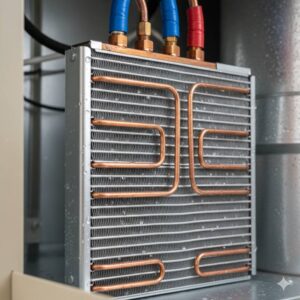
Average Lifespan of Evaporator Coils in Houston
- Traditional copper-tube/aluminum-fin coils: 8–12 years
- All-aluminum microchannel coils: 12–16 years (with proper maintenance) Houston dust, pollen, and coastal salt shorten life significantly.
5 Clear Signs Your Evaporator Coil Is Failing (2025)
- Warm air from vents despite long run times
- Ice or frost on the coil or suction line
- Hissing sounds or oil stains (refrigerant leak)
- Higher electric bills (15–30% spikes)
- Indoor humidity stays above 60% even when cooling
When Replacing ONLY the Coil Makes Technical Sense in Houston
- System is under 7 years old
- Uses R-410A (not R-22)
- Leak is confirmed isolated (electronic detection + nitrogen test)
- Outdoor unit and airflow are in excellent condition
- AHRI-matched replacement coil is available
Cost: $950 – $2,100 (2025 Houston average)
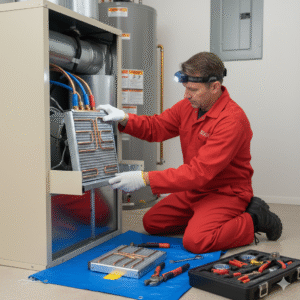
When You Must Replace the Entire HVAC System (2025–2026)
- System is 8+ years old with R-22 refrigerant (EPA phase-out)
- Repeated refrigerant leaks or widespread corrosion
- Current SEER rating below 14 (new DOE South Region minimum)
- Coastal-area corrosion affecting both indoor and outdoor coils
- Desire for 18–21 SEER efficiency and future-proofing
The Danger of Mismatched Coils
Pairing a new evaporator coil with an old condenser drops real-world efficiency 10–25%, voids manufacturer warranties, increases compressor failure risk, and violates DOE SEER2 regulations in many cases.
Quick Houston Decision Rule (2025–2026)
If your HVAC system is R-22 or 10+ years old = replace the entire system. If it’s R-410A, under 7 years, and only the coil is bad → coil replacement is technically acceptable and saves $6,000–$15,000 upfront.
Always have a licensed technician perform a full AHRI-matched load calculation and leak test before deciding.
Remember that with AirTeam we can help you carry out all the maintenance that your HVAC needs.
